









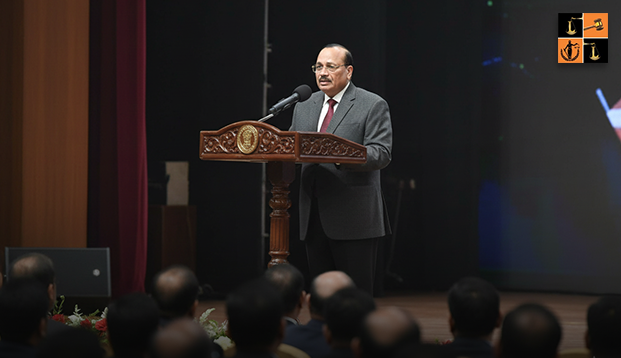
“Courts must know when to step back.” With this pointed note, Chief Justice of India Surya Kant drew a clear line on judicial interference in arbitration, cautioning that anti-arbitration injunctions cannot become a routine remedy. Addressing an international arbitration forum, he signalled that frequent court intervention threatens the core promise of arbitration, party autonomy and procedural independence, at a crucial moment when India is striving to establish itself as a reliable destination for resolving high-stakes commercial disputes.
The address comes against the backdrop of growing concerns over courts being approached to stall arbitral proceedings, often on grounds that overlap with issues best left to arbitral tribunals. The CJI highlighted that arbitration derives its legitimacy from the assurance that partie’s agreements will be honoured and that tribunals can determine their own jurisdiction without undue interference. However, he acknowledged a competing concern, courts cannot entirely disengage when proceedings appear patently abusive, legally untenable, or in conflict with public policy. This inherent tension between judicial oversight and arbitral autonomy forms the core challenge in modern arbitration law.
Expanding the discussion, he pointed to the increasing reliance on digital tools, virtual hearings, and AI-assisted processes, noting that while these advancements enhance efficiency, they also introduce concerns around confidentiality, cybersecurity, and the dilution of human judgment. He further observed that India’s ADR ecosystem remains uneven, with mediation and conciliation yet to evolve in tandem with arbitration, resulting in missed opportunities for faster and more flexible dispute resolution.
Clarifying the legal threshold, the CJI emphasised that anti-arbitration injunctions must remain a narrowly tailored remedy. He observed, “The grant of anti-arbitration injunctions must remain confined to exceptional circumstances,” stressing that indiscriminate use of such powers would erode confidence in arbitration as an independent mechanism. Drawing a parallel with the limited scope of judicial review at the post-award stage, he noted that a restrained approach not only preserves tribunal authority but also strengthens procedural fairness. On the technological front, he asserted that arbitral tribunals must retain complete control over how tools like AI are integrated into proceedings, ensuring that safeguards around confidentiality and impartial decision-making are not compromised. He also called for a structural shift towards an integrated ADR framework, where arbitration, mediation, and conciliation operate in a complementary manner rather than as isolated mechanisms.
Disclaimer: This news/ article includes information received via a syndicated news feed. The original rights remain with the respective publisher.
Picture Source :



















